How much does it cost to find an electrical fault in Gloucester?
Electrics keep tripping? Post the job for free and it goes to local electricians who cover your area. If you’ve lost power, choose the emergency option and we text them straight away.
Free to post, and only the tradesperson who takes your job on gets your details. Read our privacy notice.
Finding the fault
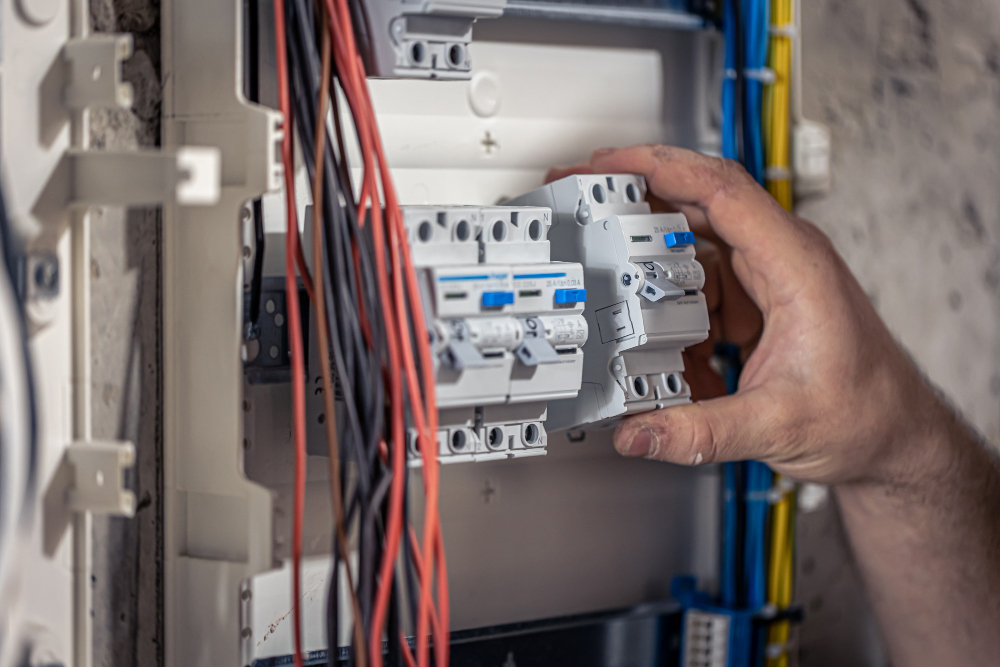
When a switch in the consumer unit keeps tripping, it’s doing its job. It has detected a problem and cut the power to protect you. Common causes include a faulty appliance, water getting into an outside light or socket, a nail or screw through a cable, a failing immersion heater or oven element, or too much on one circuit.
A useful first step is to unplug everything on the circuit that trips and reset the switch. Then plug things back in one at a time. If it trips when a particular appliance goes back in, you have probably found the culprit. If it trips with everything unplugged, the fault is likely in the fixed wiring or a fitting, and that’s a job for an electrician.
If the switch trips again straight away, stop resetting it. Leave it off and get it looked at. Don’t swap the breaker or fuse for a bigger one. If you smell burning, see scorch marks or a socket is hot to the touch, turn off the circuit and keep off it until an electrician has checked it.
Fault finding can be quick or it can take time, depending on how intermittent the fault is. Tell the electrician which switch trips, when it happens and whether the weather makes a difference, as that helps them narrow it down. If you’ve lost power completely and your neighbours have too, call 105.
What to include when you post
Faults are easier to find when the electrician knows the pattern.
- Which switch trips, with a photo of the consumer unit showing it.
- When it happens: at random, at night, in wet weather, or when something is switched on.
- Whether it still trips with everything on that circuit unplugged.
- Any recent work, such as drilling, new fittings or a new appliance.
- Any burning smell, scorch marks, buzzing or warm sockets.
- Whether any part of the house is without power right now.
- Roughly how old the house and the wiring are, and when it was last tested.
- Whether you have a prepayment meter.
What to ask
Fault finding is hard to price in advance, so ask how they charge before they come out. Some charge a call-out and then by the hour, others quote a fixed price for the first visit. Either is fine as long as you know which.
Other things to ask:
- whether small parts, like a replacement breaker or socket, are in the visit price
- whether they’ll tell you what they’ve found and give a price before doing further work
- what certificate or record you’ll get for any repair
- whether they’re registered with a competent person scheme, in case the fix turns into a new circuit or a consumer unit
If the fault points to wider problems, they may recommend an EICR. That can be worth doing, but it’s a separate job, so ask for it to be quoted as one.
Not quite the right job?
See every job on our Electrician page, or post it anyway and describe it in your own words.
Before a tradesperson starts work
Registrations
Some work must be done by a registered professional. Work on a gas boiler, cooker or fire must be done by a Gas Safe registered engineer, which you can check on the Gas Safe Register.
Our business check
Limited companies are checked with Companies House and sole traders upload their insurance certificate. Trade registrations are confirmed by the tradesperson when they sign up.
Get the price in writing
Ask for a written quote that sets out the work and the price before anything starts. Your contract for the work is with the tradesperson.
Questions
What people tend to ask before booking this job. For anything specific to your home, ask the tradesperson who takes it on when they get in touch.
If it trips again straight away, stop resetting it. The breaker is protecting you from a fault, so leave it off and get it checked.
That is likely a network fault. Call 105, the free power cut number, to report it to your local network operator.
It often points to water getting into something outdoors, such as an outside light, socket or a cable to a shed. Tell the electrician about the pattern, as it helps them check the right places first.
Yes, often. Kettles, washing machines, ovens and immersion heaters are common causes. Unplugging everything on the circuit and adding items back one at a time can show whether it's an appliance.
No, not without finding out why it trips. The switch is usually working properly. Changing it, or fitting a larger one, can leave a fault unprotected.