How much does roof cleaning or moss removal cost in Gloucester?
Moss building up on the roof? Post the job for free and it goes to local roofers who cover your area. Only the roofer who takes it on gets your contact details.
Free to post, and only the tradesperson who takes your job on gets your details. Read our privacy notice.
Moss removal and roof cleaning
Moss does well on north-facing slopes and under trees. It holds water against the tiles, and as it breaks up, clumps wash into the gutters and block them.
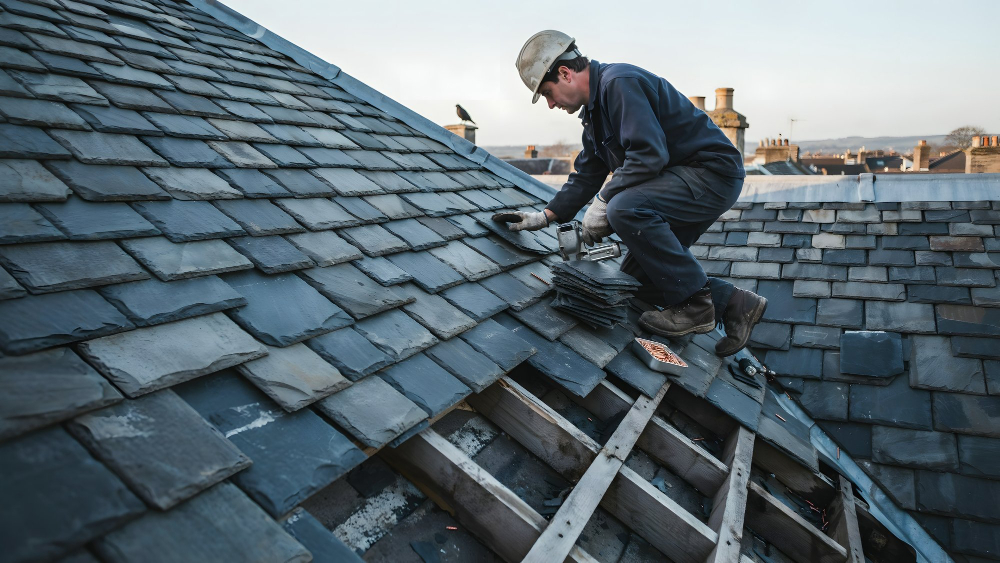
The usual method is removing it by hand with scrapers and brushes, then clearing the gutters. Many roofers follow up with a biocide treatment to slow regrowth. Pressure washing is sometimes offered, but high pressure can damage older or softer tiles, wear away their surface and force water up under the laps. Ask about the method before you agree to it.
Roof coatings are sometimes sold alongside cleaning. They’re a separate decision. Ask what problem the coating is meant to fix and what guarantee comes with it, and don’t feel pushed into it on the day.
The scope depends on the size and pitch of the roof, how many storeys, what it’s covered with and how easy it is to get onto. Some roofs are fragile and can’t be walked on. Cement sheet roofs on older garages and outbuildings are one example, and on buildings from before 2000 those sheets may contain asbestos, so mention them if you have them.
Only the tradesperson should be on the roof. Please don’t try this yourself with a ladder and a scraper.
What to include when you post
Photos and a few basics let a roofer judge how much moss there is and how they’d get to it.
- Photos of each roof slope, taken from the ground or a window
- What the roof is covered with (concrete tiles, clay tiles or slate) and its rough age
- How many storeys and the rough size of the house
- Whether you want the gutters and downpipes cleared as part of the job
- Any trees overhanging the roof
- Conservatories, extensions or fragile roofs below that affect access
- Whether you’d like a treatment to slow regrowth afterwards
- When you’d like it done, if you have a preference
Choosing a roofer and what to ask
Ask exactly how they’ll clean the roof: by hand, low pressure or high pressure, and what they’ll do to protect the tiles. The quote should say whether gutters and downpipes are cleared afterwards, whether a treatment is applied and what it is, and how they’ll deal with the moss that comes off.
Ask them to note any cracked or slipped tiles they find and send you photos, rather than fixing them without asking. Repairs should be agreed separately.
If a coating is recommended, ask why, and get the details in writing before you decide. Check they hold public liability insurance, and agree how paths, drains, plants and cars will be protected from runoff and debris.
Not quite the right job?
See every job on our Roofer page, or post it anyway and describe it in your own words.
Before a tradesperson starts work
Registrations
Some work must be done by a registered professional. Work on a gas boiler, cooker or fire must be done by a Gas Safe registered engineer, which you can check on the Gas Safe Register.
Our business check
Limited companies are checked with Companies House and sole traders upload their insurance certificate. Trade registrations are confirmed by the tradesperson when they sign up.
Get the price in writing
Ask for a written quote that sets out the work and the price before anything starts. Your contract for the work is with the tradesperson.
Questions
What people tend to ask before booking this job. For anything specific to your home, ask the tradesperson who takes it on when they get in touch.
It holds moisture against the tiles and blocks gutters as it washes down. It's worth keeping on top of.
Over time, yes. A treatment can slow it down.
It can damage some tiles and push water where it shouldn't go. Many roofers prefer hand removal. Ask about the method and pressure before you agree.
Only if there's a clear reason for it. Ask what it will fix, how long it's expected to last and what guarantee comes with it, and take your time deciding.
Usually, though roofers avoid working on wet or frosty roofs, and treatments generally need a dry spell to work. Ask the roofer when they'd plan to do it.